
Opinion: An Un-Common Guide to UCU’s NEC Elections, Factions, Slates and Independents

One member’s guide to the rather complicated NEC elections, factions, slates etc.

Hopefully, you have received your ballot papers to vote in the UCU’s NEC elections, which will have a list of names of many people who you have probably never heard of. There will also be election statements, but these might not help a great deal unless you’re already keenly aware of candidates’ positions and the internal politics of the union.

It’s something of an open secret that the ‘democratic’ element of UCU is influenced by a series of factions and a handful of ‘independents’. Trying to make sense of these different political groupings in the UCU is difficult – even for members who have been part of the union for years. For new members, it may be nigh on impossible.

There are guides to help you choose, however, often published as slates of candidates that one of other faction is backing.

Here’s one member’s take on the choices facing members when they open their ballot papers. We hope it helps…

The main factions are:

  • UCU Commons (UCUC)
  • UCU Left (UCUL)
  • UCU Agenda / Independent Broad Left (IBL)
  • ‘Independents’…

UCU Commons

The UCU Commons (UCUC) voting slate is HERE.

The UCUC faction grew out of the campaign supporting the current General Secretary (GS), in 2020. Critics like to emphasise this point, dressing the faction up as essentially a fan club for the GS. UCUC members protest that the faction has developed beyond these origins, with many members who had no involvement with her campaign; and indeed, UCUC’s recent proposal over industrial action strategy departed from that advocated by the GS.

Nevertheless, it wouldn’t be totally unfair to characterise this faction broadly as “supporters of Jo Grady’s agenda” (including her recent controversial decision to break from union conventions by openly opposing HEC decisions and counterpoising her own alternative strategy).

Generally, this agenda means backing a strategy of building up the density and capacity of local branches as the primary goal before launching strike ballots, and aiming to secure ‘super-majorities’ with high turnouts rather than ‘scraping over the line’. This approach builds from Jane McAlevey’s approach to industrial ‘organising for power’, but thus far the GS has failed to win support for the approach within the democratic structures of the union.

UCUC emphasises its support for trans rights, which it sees as non-negotiable. UCUC are now broadly in an alliance with the Independent Broad Left (IBL)/UCU Agenda grouping (see below) over industrial relations policy and appear on the latter’s voting recommendations but even with this the two groups have a (combined) minority of HEC votes.

So, if you opposed the policy of indefinite strike action and tend to support the General Secretary’s arguments, look at UCUC and maybe vote for their list.

Again, a list of UCUC’s candidates to vote for is HERE.

UCU Left

UCU Left (UCUL) voting slate is HERE.

UCUL is a true faction, with its own AGM, committee, and membership fees. They frame themselves as the ‘Left-wing’ of UCU – every other faction would disagree and are generally annoyed they ‘stole’ the label.

The prominence of members of the Socialist Workers Party (SWP) within the faction is a repeated source of controversy, which its supporters dismiss as “red baiting”.

Major differences between UCUL and other factions are:

  • their strong support for maximum use of strike action, believing the union’s failures are explained by a lack of militancy; and
  • an aversion to the use of consultative e-ballots of all members, preferring that decisions be made by local meetings and their elected branch delegates (UCUL claims such an approach maximises the opportunity for democratic discussion and debate, while their critics point out such meetings tend to be poorly attended and over-represent the views of activists while wilfully ignoring the view of the wider membership).

UCUL typically contest GS Jo Grady’s approach in acrimonious ways. Her calls for wider consultation of UCU’s members are often met with disdain by UCUL, with its website accusing her of rigging member consultation. Many in the faction give the impression that Grady, and to some extent the union’s bureaucrats more broadly, are hurdles to get over; to bystanders in national union meetings, the feeling certainly looks mutual.

While they have a minority of seats on HEC, UCUL can currently secure majorities for its agenda. UCUL members of HEC proposed and voted for indefinite all out strike action – a policy they secured initially with supporting votes from some ‘independents’, and which they and their supporters continued to advocate for in spite of the Branch Delegate Meeting (BDM) vote 2:1 in favour of the GS’s alternative strategy.

So, if you support the policy of indefinite strike action, believe that UCU needs to adopt such policies moving forward, then look at UCUL and maybe vote for their list.

UCU Agenda / Independent Broad Left

A voting recommendation, albeit not identified as such, is HERE.

When is a faction not a faction? When it is UCU Agenda/Independent Broad Left (IBL)! The IBL group was set up after the merger of the AUT and NATFE forming UCU in reaction to UCUL’s then domination of NEC and had little organisation outside of NEC (mostly an email list that members came on to and off as and when successful in elections). Officially, the IBL no longer exists and UCU Agenda was silent for well over a year until this recent blog post laying out UCUL/SWP links. They do not produce a ‘slate’ per se and don’t label themselves as part of a faction in elections. Hence the ‘independent’ and the ‘broad’ are signifiers. So, who are they?

UCUL call them ‘the Right’, which upsets most if not all of them. Members have belonged to the Labour Party, the Communist Party of Britain (CPB), the Scottish National Party (SNP), Plaid Cymru, the Liberal Democrats, and no party at all (the Greens were welcome but never came forward), and generally regard themselves as of the Left –  their preferred labels would be ‘progressive’, ‘sensible’, ‘reasonable’ or ‘pragmatic’ (critics describe them as ‘depressed and defeated’) – while they regard UCU Left with its SWP and other Trotskyist leadership as ultra- or hard left. They are advocates for a strategic approach – typically targeted or escalatory as opposed to indefinite – to industrial action and call for greater surveying of the full membership by e-ballots before decisions are made by HEC on industrial policy (e.g. HERE) as a way of informing and mobilising members as well as eliciting their views and appetite for action.  

As noted, IBL/Agenda is essentially now working with UCUC in an alliance on issues of industrial action policy – on which they are relatively close – and to prevent UCUL’s agenda dominating HEC.

The voting recommendations of members in this tendency are HERE and you’ll notice there is overlap with UCUC at points. This really is the ‘vote exactly like this to minimise UCUL members on HEC’ list. 

‘The Independents’

As the ‘I’ in IBL indicates, candidates from this pseudo- or non-faction run as independents, but can be generally identified by voting recommendations such as the one above.

Generally, however, it is incredibly difficult to get elected to HEC if you are not in a faction and don’t appear on any lists; but there are people running without a faction backing them. Many of these are members of the influential ‘Rank and File Revolution’ WhatsApp group, and insofar as a tendency exists you might see here their ‘indefinite discontinuous’ strike strategy.

But you’ll also find some independents endorsed on the UCUL voting list (indicating their ‘vibes’ as ‘UCUL-adjacent’) and the “stop UCUL” voting list, but the others have to be discovered by reading their actual personal statements and making a judgement on whether you like the sound or not.

Opinion: HOW to Vote in the UCU NEC Elections

From Michael Abberton

From Michael’s Medium blog: here

This is about HOW to vote using the Single Transferable Vote (STV) system, not WHO to vote for.

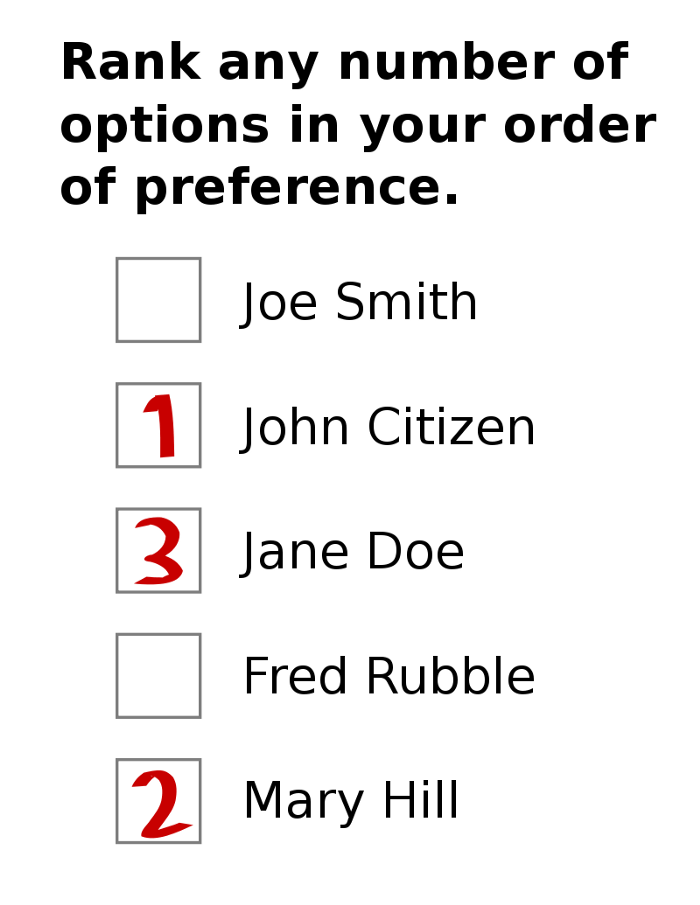
Mock STV ballot paper

For transparency, I am the Cambridge University UCU Branch President, but I am writing this blog in a personal capacity and the views expressed here do not necessarily reflect those of the branch.

Election time is upon us once again with a plethora of candidates for National Executive Committee (NEC) and associated positions standing on variety of manifestos. This blog is not about who to vote for, but HOW to vote using the STV system — if you don’t know how the system works, you could be voting for a candidate that you do not support.

The UCU website says, “Voters are asked to rank candidates in order of preference (1, 2, 3, etc.) until they can no longer express a preference.” But what does this mean? Does it mean that I have to rank all the candidates and fill every box on the ballot? Do I have to vote in the election for every position?

The simple answer to this question is no. But not only don’t you have to, you shouldn’t do that. Where the UCU instruction says until they can no longer express a preference I would take that to mean that if you would not prefer a certain candidate to get a vote — you should not list them. Don’t forget, in this system if you write a number — any number — next to candidate’s name on the ballot — they potentially get a vote.

On the Electoral Reform Society website, it says this, “Voters can put numbers next to as many or as few candidates as they like.” If you only have three preferred candidates, then only put 1, 2, and 3 into the table. If you only support one candidate from a list of eight, for example, then ONLY put 1 next to their name and leave the others blank.

Isn’t this breaking the system? I would argue that it is not. Every voter has only one vote but knowing how STV works means that you can control how that vote is used.

The Single Transferable Vote (STV) system is a type of proportional representation used in some elections, such as local government elections in Ireland and Australia. It is different from the traditional “first past the post” system we are used to in the UK, where voters choose one candidate and the candidate with the most votes wins. STV allows voters to rank candidates in order of preference. If a candidate does not receive enough votes to be elected, their votes are transferred to the next preferred candidate. This continues until all seats are filled.

Every position has a baseline quota of 1st Preference votes to reach in order to be elected. If a candidate meets that quota on the first round, then any votes for that candidate in excess of that quota get transferred to their expressed 2nd Preference. This could mean that despite one candidate getting many more 1st Preference votes and hitting quota, the 2nd Preference could overturn that win. And this works all the way down the line. If no candidate meets the quota, then the candidate with the least number of votes is eliminated and their preference votes are redistributed. There are different systems for how the redistribution works but essentially they are doing the same thing.

So be careful when you vote — but by all means do use your vote. To get the most out of the election, there are a few things you can do:

  • Research the candidates: learn about the candidates running in the election and their positions on the issues that matter to you. This will help you make an informed decision when ranking them.
  • Be strategic: Think about the chances of your first choice candidate winning and how your vote will transfer to your next choices.
  • Vote for a range of preferred candidates — don’t list those who you think should not get a vote. At the same time, lost seriously at second and third choices if available for each post.
  • Encourage others to vote: Get your friends and colleagues to vote, and educate them on the STV system if they are not familiar with it.

Get voting!

Opinion: How You Should Vote in the Current NEC Elections

From Dyfrig Jones

UCU NEC election 2023 — Voting Recommendations

From Dyfrig’s Medium blog: here

This meant to be a short blog with my recommendations on how to vote in UCU’s NEC elections, so I’m going to avoid writing a long preamble. I think that the union has been in a bit of a mess over the past few years, and I think that the best way of sorting this mess out is to try and elect new people to the NEC.

NEC ballot papers will start to arrive in the post today. These will include members election statements, but I know from experience that choosing how to cast your ballot can be quite daunting — election addresses are rarely direct, and you find yourself trying to judge a candidate’s political leanings by reading between the lines.

The following is a list of people that I think hold reasonable, pragmatic views on the key questions facing the union. They are people who — as far as I know — argued against the current NEC’s plan for indefinite strike action. Some of them I know personally, some I know from their social media presence. If I have misrepresented anyone in this list, then I am happy to amend it on request — and if any candidates want to make the case for being included, then they’re also welcome to get in touch.

If you’re a UCU member, please make sure to vote in these election, and vote for the candidates listed below.

EDIT: I was asked on Twitter to explain a bit more about why I support these candidates. I have written a separate post here, which explains why I think some of the current members of the NEC have made some staggeringly bad decisions, and we need to replace them with people who will make better decisions.

UK-wide elections

Vice President and Treasurer

Please, please, please, in the name of all that is good and holy, vote for Emma Battell Lowman for Vice President, and David Harvie for Honorary Treasurer. No second preferences. These are both vitally important posts, and we need to ensure that Emma and David are elected.

UK-elected members HE (4 seats; to include at least one post-92, one academic related)

Every HE member has a vote here, regardless of where in the UK they live.

Recommend that you rank 1st, 2nd or 3rd: Adam Hansen, Dyfrig Jones, Jak Peake

Recommend that you rank 4th, 5th, 6th or 7th: Francis Clarke, Rebecca Harrison, Chris O’Donnell, Caroline Proctor

Do not recommend that you vote for any other candidates

UK-elected members FE (2 seats)

Recommend that you vote for Jackie D’Arcy, and no other candidates

Representatives of disabled members (2 seats; one HE member and one FE member to be elected to include at least one woman)

Recommend that you vote for Bijan Parsia, Em Campbell and no other candidates

Representatives of LGBT+ members (2 seats; one HE and one FE member to be elected)

Recommend that you vote for Mark Pendleton and no other candidates

Representatives of black members (2 seats; at least one woman to be elected)

Recommend that you vote for Jak Peake and Victoria Showunmi, and no other candidates

Representatives of migrant members (2 seats, at least one non-EU member to be elected)

Recommend that you vote for Vivek Thuppil and no other candidates

Representatives of casually employed members (2 seats; one HE member and one FE member to be elected)

Recommend that you vote for Matilda Fitzmaurice and no other candidates

Geographically-elected members of the National Executive Committee

Midlands HE (3 seats)

Recommend that you vote for Emma Battell Lowman, Francis ClarkeCaroline Proctor and no other candidates

North West HE (2 seats)

Recommend that you vote for Philippa Browning and Michael McKrell as either 1st or 2nd preference

Recommend that you vote for Lucy Burke as 3rd preference, and do not vote for any other candidates

North West FE

Recommend that you vote for Helen Kelsall and no other candidates

South HE (4 seats to include at least one woman)

Recommend that you vote for Rebecca Harrison and no other candidates

South FE (1 seat)

Recommend that you vote for John Fones and no other candidates

Scotland HE — UCU Scotland President

Recommend that you vote for Chris O’Donnell as 1st preference, Jeanette Findlay as 2nd preference, and no other candidates

Honorary Secretary UCU Scotland

Recommend that you vote for Chris O’Donnell as 1st preference and no other candidates

The Campaign for UCU Democracy welcomes points of view on the democratic structures of the union and who would best serve the union in these positions. If you would like to comment on anything in Dyfrig’s post, please do so below.

Who are we and what do we think?

Campaign for UCU democracy was launched in early 2023 around the start of the 2023 National Executive Committee (NEC) elections. One of our main aims is to push for UCU’s national committees – NEC, but also the Higher Education Committee (HEC) and Further Education Committee (FEC) – to embed member consultation, preferably via e-ballot, into their decision-making processes. 

We also believe that the published minutes of UCU’s national committees could be made more transparent, with individual members’ votes recorded in the minutes. If Members of Parliament voting records can be accessed publicly, should our elected national representatives of the union not be held to the same standard of accountability? We think so. Who are we? To find out more about us and learn about what we stand for you can read about us here and our ideas in our manifesto here